

Professional real estate photography plays an important role in how properties are presented online. High-quality images help buyers and renters understand a space, highlight its best features, and make listings more engaging.
But property marketing is no longer limited to static photos. Today, real estate professionals can combine photography with 3D tours, floor plans, 360° views, and other digital property experiences to give prospects a more complete understanding of a space.

What Is Real Estate Photography?
Real estate photography is the practice of photographing residential and commercial properties for listings, marketing, sales, and rentals. Unlike general photography, property photography focuses on presenting a space clearly while making it visually appealing.
Professional real estate photography typically includes:
-
Interior and exterior photos
-
Living rooms, kitchens, bedrooms, and bathrooms
-
Outdoor spaces and amenities
-
Architectural details and property features
For real estate agents, these images are often the first impression potential buyers have of a property. Professional photography helps listings look more polished while giving viewers a realistic sense of the space.
For professionals looking to expand their services, real estate photography solutions can also combine property photography with 3D tours and other digital deliverables.
Why Professional Real Estate Photography Matters
Real estate listings compete for attention across property websites, social media, and digital advertising. Poorly lit or poorly composed images can make even a well-maintained property look less appealing.

Professional photography for real estate helps:
-
Create a strong first impression
-
Showcase important property features
-
Present rooms clearly and consistently
-
Give buyers a better understanding of the space
-
Create high-quality assets for property marketing
For real estate professionals, realtor photography is not simply about taking attractive pictures. It is about presenting a property in a way that helps potential buyers decide whether they want to learn more.
For brokers and teams managing multiple listings, a broader real estate marketing solution can also help bring different property marketing assets into one workflow.
How to Take Real Estate Photos
If you're learning how to take real estate photos, focus on a few fundamentals.
Prepare the Property
Declutter rooms, organize surfaces, open curtains and blinds, and turn on appropriate lights. A clean space is easier to photograph and allows buyers to focus on the property.
Choose the Right Perspective
Use camera positions that show the size and layout of each room. Keep the camera level and avoid extreme wide-angle views that can make spaces look unrealistically large.
Use Good Lighting
Combine natural and interior lighting when possible. Balanced lighting helps preserve details and makes rooms look more inviting.
Capture Key Spaces
Prioritize living areas, kitchens, bedrooms, bathrooms, outdoor spaces, and unique property features. Use multiple perspectives when needed to help viewers understand the space.
Edit for Accuracy
Correct exposure, color, and perspective while keeping the property realistic. The goal is to improve the presentation without changing what the property actually looks like.
Real Estate Photography Tips for Better Listing Photos

A few practical real estate photography tips can make a significant difference:
-
Show the space, not just the furniture. Choose compositions that communicate the room's layout.
-
Keep vertical lines straight. This creates a more professional and natural appearance.
-
Avoid excessive distortion. Extremely wide-angle images can create unrealistic proportions.
-
Highlight key features. Focus on windows, views, renovations, fireplaces, and other selling points.
-
Keep images consistent. Similar exposure, color, and composition create a cohesive listing.
-
Prioritize useful views. More photos are not necessarily better if they are repetitive.
Real Estate Listing Photography: What Should You Capture?

A strong real estate listing photography package should cover the spaces buyers care about most.
Exterior: Front elevation, entrance, landscaping, and outdoor areas.
Living spaces: Living room, dining area, and other common areas.
Kitchen: Overall layout, appliances, finishes, and storage.
Bedrooms: Room size, windows, storage, and layout.
Bathrooms: Fixtures, finishes, and overall design.
Property features: Views, balconies, pools, fireplaces, amenities, and unique architectural details.
For larger properties, however, individual photographs may not fully communicate how these spaces connect. This is where 3D property capture can complement traditional photography.
Beyond Photography: 3D Property Capture
Professional photography shows individual views of a property, but it does not provide the full spatial context of the building.
3D property capture can add another layer of information by allowing potential buyers to explore a property digitally and understand how different spaces connect.

Depending on the capture solution, a single property visit can support:
-
Professional property photos
-
Interactive 3D tours
-
360° views
-
Floor plans
-
Spatial measurements
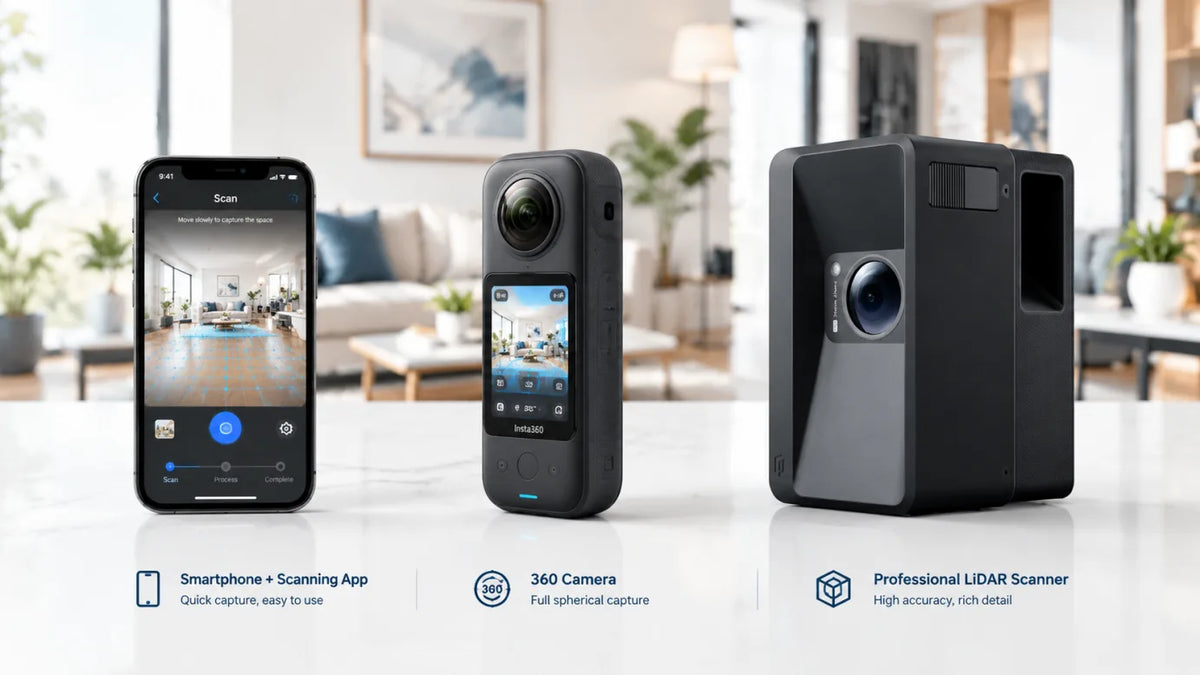
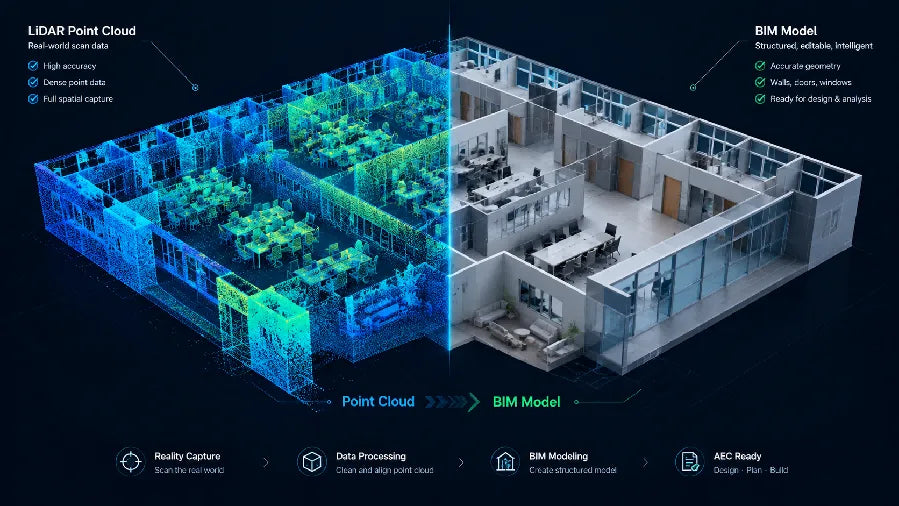
Instead of treating each deliverable as a separate workflow, a LiDAR-based capture solution can provide the spatial foundation for creating multiple property marketing assets.
This approach is part of a broader shift toward digital real estate marketing, where visual and interactive content work together to create a more complete property experience.
Real Estate Photography With a LiDAR Camera

A LiDAR camera doesn't have to replace professional real estate photography. Instead, it can expand what photographers and real estate professionals can capture from the same property visit.
Traditional photography focuses primarily on creating individual images. LiDAR capture adds spatial information that can support interactive and measurable digital property experiences.
This means a single capture can potentially become:
Photos → 360° Views → 3D Tour → Floor Plan → Measurements
For professional real estate photographers, this can create an opportunity to offer more value to agents, brokers, and property owners without relying on completely separate capture workflows.
How to Choose a Camera for Real Estate Photography
When choosing equipment for real estate photography, consider more than image quality.
Image Quality
Can the camera produce high-quality images in different lighting conditions?
Field of View
Can it capture interiors effectively without excessive distortion?
Capture Efficiency
How quickly can you capture a property?
Spatial Capture
Can it capture spatial information in addition to images?
Deliverables
Can one capture support photos, floor plans, 3D tours, and other property assets?
For professionals who want to move beyond traditional property photography, a 3D LiDAR camera for real estate can provide both imaging and spatial capture capabilities in one workflow.
Realsee LiDAR Cameras for Real Estate Professionals
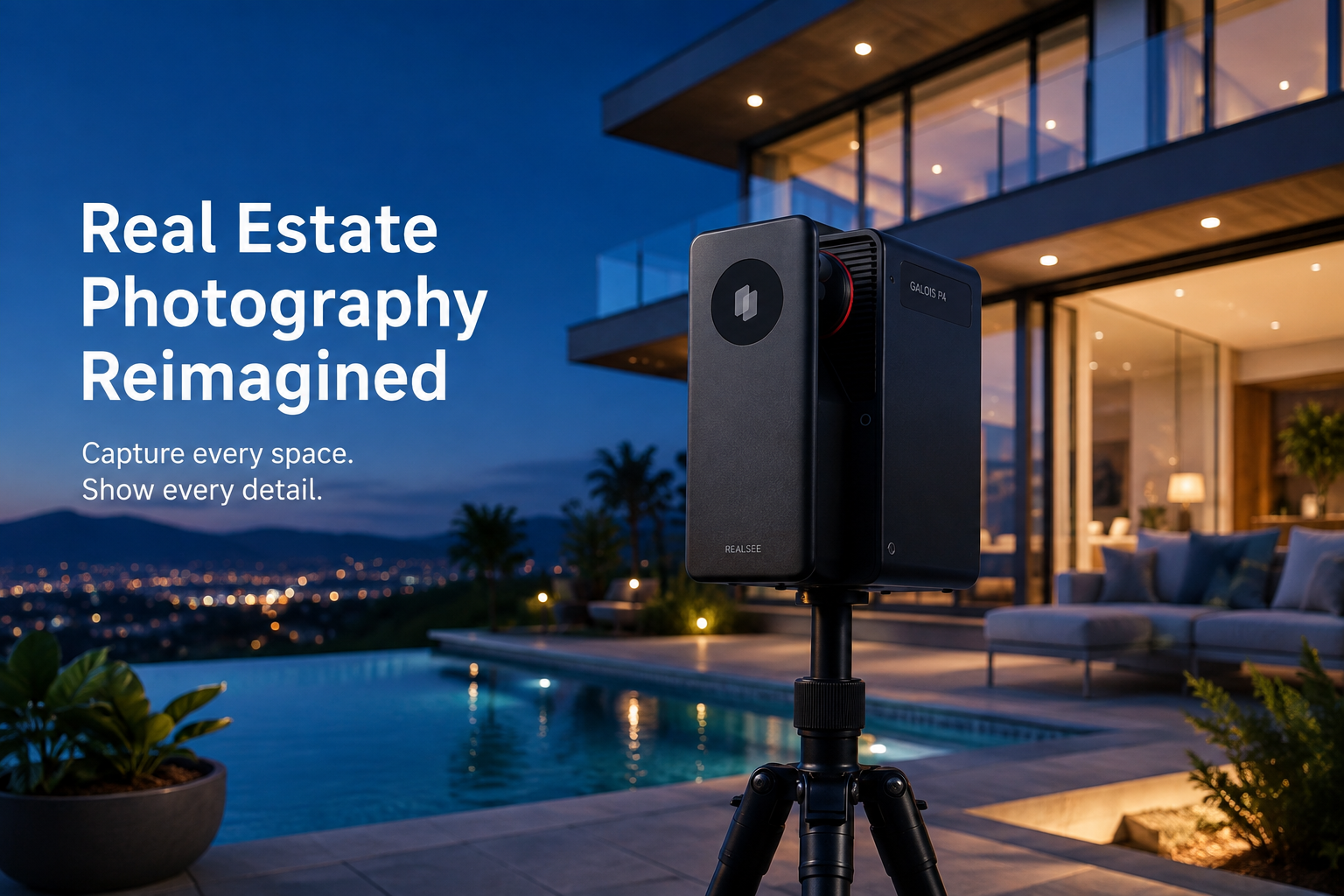
Realsee's LiDAR camera solutions are designed to help real estate professionals capture properties and turn one capture into multiple digital experiences.
With a Realsee workflow, professionals can create property photos alongside interactive 3D tours, floor plans, 360° views, measurements, and other digital property assets.
This makes LiDAR capture useful not only for real estate photographers, but also for agents, brokers, property marketers, and other professionals who need efficient ways to present properties online.
Capture more than photos. Create a complete digital property experience with Realsee.
How to Get Into Real Estate Photography
If you're wondering how to get into real estate photography, start by learning the fundamentals of composition, lighting, camera settings, and property presentation.
Build a portfolio by photographing different types of properties and develop a consistent workflow. As your business grows, consider expanding beyond traditional photography with services such as floor plans, 3D tours, and 360° property experiences.
Offering more digital property assets can help differentiate your services and create additional value for real estate clients.
Conclusion
Professional real estate photography helps properties stand out, but today's property marketing can go beyond photos. With Realsee's LiDAR capture, one property visit can produce photos, 3D tours, floor plans, 360° views, and measurements.
Capture more. Deliver more. With Realsee.