

Real estate photography equipment
Best Camera for Real Estate Photography: DSLR, 360 Camera, Drone, or 3D LiDAR Camera?
The best camera for real estate photography is not one camera for every job. A standard listing shoot, a drone add-on, a lightweight virtual tour, and a 3D documentation package all need different tools.
This guide breaks the decision down by use case, so photographers can build a practical real estate photography solution without buying advanced equipment before the business needs it.
Quick Answer: Which Camera Should You Buy First?
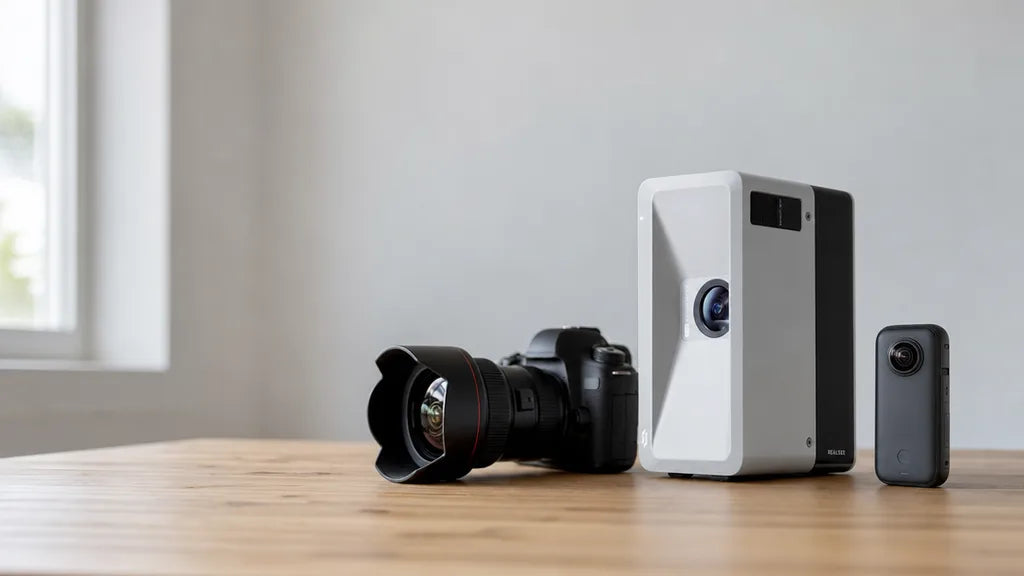
If you are choosing the best camera for real estate photography, start with the deliverable. Use a DSLR or mirrorless camera for listing photos, a drone for aerial context, a 360 camera for lightweight virtual tours, and a 3D LiDAR camera when the job needs a high-value 3D tour plus spatial outputs.
- Listing photos: DSLR or mirrorless camera, wide-angle lens, tripod, lighting, and editing workflow.
- Aerial marketing: Drone capture where property type, budget, and local rules support it.
- Basic virtual tours: 360 camera capture for simple walkthrough experiences.
- Advanced property media: 3D LiDAR capture when clients need real estate photography deliverables such as 3D tours, floor plans, point clouds, 3D models, or CAD-related outputs.
What "Best Camera" Really Means in Real Estate Photography
In real estate photography, the best camera is the one that fits the client deliverable, property type, budget, and turnaround expectation. A DSLR camera may be best for a photo-only listing. A drone may be best for a large exterior or land-focused property. A 360 camera may be enough for a simple tour. A 3D LiDAR camera becomes relevant when visual media and spatial data need to come from the same site visit.
This is why equipment decisions should start with the service package, not with a spec sheet. Buyers are not only paying for a device. They are paying for the outputs the device helps create.
Camera Types Compared by Use Case
Use this table as a buying filter before comparing individual camera models. Model rankings change, but the use-case logic stays fairly stable.
| Camera type | Best for | Limitations | Good buying signal |
|---|---|---|---|
| DSLR or mirrorless camera | Listing photos, interiors, exteriors, detail shots, agent marketing, and most entry-level real estate photography packages. | Does not automatically create 3D tours, floor plans, point clouds, or spatial deliverables. | You sell photo-first listing packages and need consistent still-image quality. |
| Drone | Aerial context, large lots, views, land, exterior storytelling, and premium listing add-ons. | Subject to local rules, weather, pilot skill, property suitability, and client budget. | The property's exterior context matters to the buying decision. |
| 360 camera | Lightweight virtual tours, quick walkthroughs, and budget-conscious immersive packages. | May not provide the visual quality, spatial data, or downstream outputs needed for premium packages. | You need a simple tour add-on and the client does not require advanced spatial deliverables. |
| 3D LiDAR camera | High-value 3D tours, spatial capture, floor plans, point clouds, 3D models, and CAD-related workflows. | Higher investment, best justified when the service package includes richer deliverables. | Your clients need more from one capture than photos or a basic tour. |
When a DSLR or Mirrorless Camera Is the Right First Buy
For many photographers, the right first camera for real estate photography is still a DSLR or mirrorless body paired with a wide-angle lens, tripod, and editing workflow. This setup handles the core job: clean listing photos that show the property clearly.
A DSLR camera for real estate photography is a strong fit when the package is photo-first. It gives you control over exposure, composition, lens choice, and image editing. It is not the whole stack if the client also expects tours, floor plans, or spatial files.
Use DSLR or mirrorless gear when the client needs MLS-ready photos, exterior shots, and marketing images.
Add a drone or 360 camera only when the property and package justify the extra capture step.
Traditional photo gear does not create point clouds, 3D models, or CAD-related outputs by itself.
When a Drone Belongs in the Real Estate Photography Kit
A drone is not a replacement for a real estate photography camera. It is a separate tool for exterior context. It can be useful for large lots, waterfront views, rural properties, commercial exteriors, new developments, and listings where location is part of the value.
Drone work also has practical constraints. Rules, weather, safety, pilot licensing, editing time, and budget all matter. For many listings, interior photos still do more of the sales work than aerial shots.
When a 360 Camera Is Enough
A 360 camera can be a practical middle step for photographers who want to offer lightweight virtual tours. It is usually easier to carry and easier to explain than a full spatial capture workflow.

The tradeoff is deliverable depth. A 360 camera may be fine for a simple walkthrough, but it may not be enough when the buyer needs floor plans, point clouds, 3D models, or more advanced handoff files. Realsee's deliverables page shows that capture route and workflow affect what outputs are available, including 3D tours from mobile, 360, Galois, and other supported routes.
When You Need a 3D LiDAR Camera
A 3D LiDAR camera fits when the job is no longer just about photos or a lightweight tour. It is for photographers and property teams who need visual capture plus spatial data from the same project.

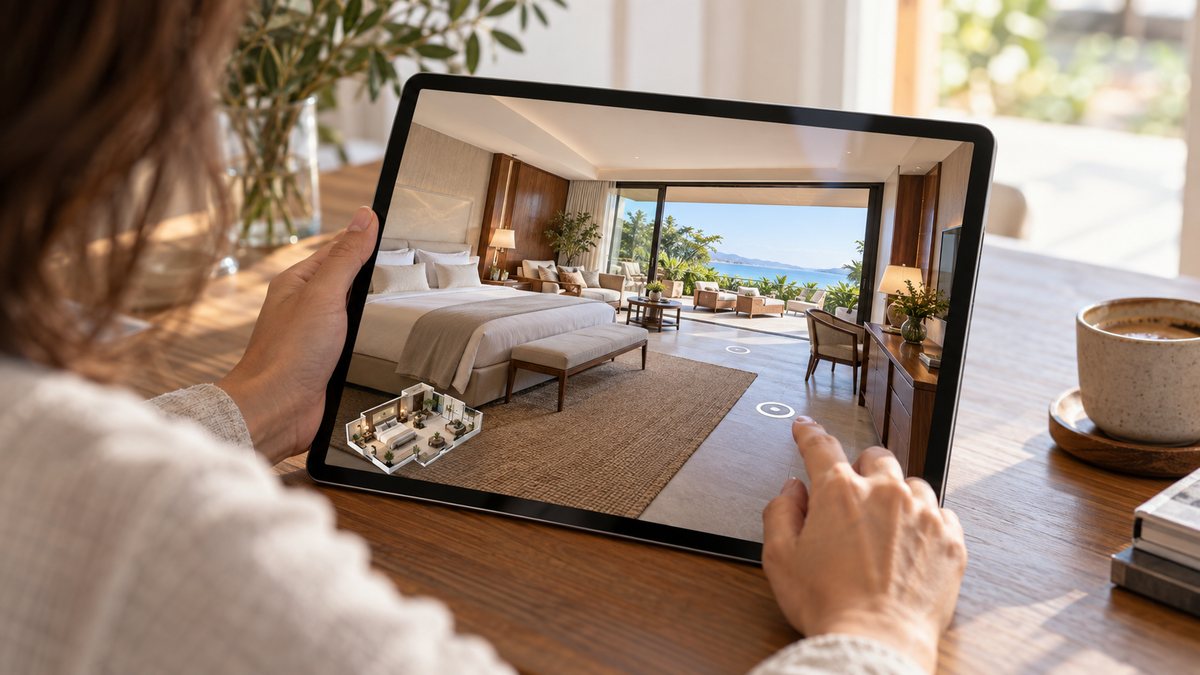
That matters when a shoot needs to support an interactive tour, floor plan, point cloud, 3D model, CAD-related output, or a documentation workflow. Realsee describes scan outputs that can include point clouds, 3D models, CAD, floor plans, and high-definition panoramas from a single scan workflow where applicable.
Use a 3D LiDAR camera when the job needs:
- A 3D tour that feels like a professional property media product, not only a simple panorama set.
- Floor plans or layout outputs as part of the client package.
- Point clouds, 3D models, or CAD-related outputs for commercial, AEC-adjacent, or documentation use cases.
- One capture workflow that can support multiple Realsee deliverables.
- A higher-value package where the equipment cost is tied to revenue, not just curiosity.
Where Galois P4 Fits in the Buying Decision
Galois P4 3D LiDAR Camera is not the best camera for every real estate photography job. It is best understood as a professional 3D LiDAR camera for higher-value spatial capture workflows.

For simple listing photos, a DSLR or mirrorless camera is still the more direct tool. For aerials, a drone is the right tool. For a basic virtual tour, a 360 camera may be enough. Galois P4 fits when the package needs 3D tour capture, high-detail panoramic imagery, point cloud capture, and deliverables that can extend beyond standard listing media.
Official Realsee pages describe Galois P4 with up to 300MP panoramic output, a 16-second scan cycle, 100m LiDAR scanning range, and point cloud capture. Those specs matter most when the business model can sell more than a photo gallery.
Use it when advanced capture supports the client outcome. Do not buy LiDAR just to replace a camera that already handles photos well.
Use it when a client needs a 3D tour, floor plan, point cloud, 3D model, or CAD-related deliverable.
The value comes from capture plus platform delivery, not from the hardware alone.
Best Camera for Real Estate Photography in 2026: Buying Criteria
If you are searching for the best camera for real estate photography 2026, avoid starting with a ranked list of camera model names. Start with the jobs you want to sell and the outputs clients are willing to pay for.
Buying checklist
- Define the deliverable: photos, aerials, 360 tour, 3D tour, floor plan, point cloud, 3D model, or CAD-related output.
- Match the camera to the package: do not buy advanced capture gear before there is a clear service offer.
- Check workflow fit: capture speed, editing time, hosting, export options, and client handoff matter as much as image quality.
- Protect margin: equipment should support higher-value packages or faster delivery, ideally both.
- Ask before overbuying: if you are unsure whether 3D LiDAR fits your workflow, Contact Realsee to discuss your property type, deliverables, and package goals.
Sample Equipment Stacks by Package
Most real estate photographers do not need to buy every camera type at once. A staged equipment stack is easier to sell, train, and scale.
DSLR or mirrorless camera, wide-angle lens, tripod, lighting, editing software, and gallery delivery.
Photo kit plus drone capture for properties where exterior context or land value matters.
Photo kit plus 360 camera and tour hosting for simple virtual walkthrough packages.
Photo kit plus professional 3D LiDAR capture for 3D tours, floor plans, point clouds, 3D models, and CAD-related outputs where needed.
FAQ About Choosing a Real Estate Camera
What is the best camera for real estate photography?
The best camera depends on the job. Use a DSLR or mirrorless camera for listing photos, a drone for aerial context, a 360 camera for simple virtual tours, and a 3D LiDAR camera when the client needs 3D tours plus spatial deliverables.
Is a DSLR camera good for real estate photography?
Yes. A DSLR or mirrorless camera is still a strong base for real estate listing photos, especially when paired with a wide-angle lens, tripod, lighting, and editing workflow.
Do I need a drone for real estate photography?
You need a drone when exterior context matters, such as large lots, views, land, commercial exteriors, or premium listings. It is not necessary for every property.
Is a 360 camera enough for real estate photography?
A 360 camera can be enough for a lightweight virtual tour. It may not be enough if the package needs higher-end visuals, floor plans, point clouds, 3D models, or CAD-related outputs.
When should I use a 3D LiDAR camera for real estate photography?
Use a 3D LiDAR camera when the project needs spatial capture, professional 3D tours, floor plans, point clouds, 3D models, or documentation-oriented deliverables from one workflow.
Is Galois P4 the best camera for every real estate photographer?
No. Galois P4 is a fit for advanced 3D LiDAR capture workflows. It is not a replacement for every DSLR, drone, or 360 camera use case.
What camera should a beginner real estate photographer buy first?
Most beginners should start with a DSLR or mirrorless camera, wide-angle lens, tripod, lighting, and editing workflow. Add drone, 360, or 3D LiDAR capture when the service package justifies it.
What is the best camera for real estate photography in 2026?
For 2026, the better question is which camera fits your deliverable. Photo-first packages need DSLR or mirrorless gear; immersive or spatial packages may need 360 or 3D LiDAR capture.