

Property management marketing has two jobs: give property owners a clear reason to hire your team, and help qualified renters decide whether a vacancy is worth seeing. Build both paths around useful property information, consistent local visibility, and listing assets you can reuse. That approach turns each apartment into an ongoing marketing resource.
What Property Management Marketing Needs to Accomplish
Effective property management marketing should create qualified conversations, not simply increase impressions. Your audience has two different decisions to make. An owner is evaluating whether your team can protect revenue, reduce operational work, and represent their property well. A renter is deciding whether an available apartment fits their daily needs.
Treat those decisions as separate journeys, even when they start on the same website or social account. The owner journey needs proof of service, local knowledge, and a straightforward next step. The renter journey needs accurate availability, clear photos, layout information, and a low-friction way to ask questions or schedule a tour.
| Audience | Main Question | Useful Marketing Content | Next Step |
|---|---|---|---|
| Property owners | Can this team manage my rental well? | Service pages, neighborhood expertise, process details, owner case examples | Request a management consultation |
| Prospective renters | Is this apartment worth seeing in person? | Listing photos, floor plans, virtual tours, amenity details | Request information or schedule a showing |
When the message matches the decision, your team can spend less time explaining basic facts one-on-one and more time speaking with people who are ready to move forward.
Market Your Management Services to Owners and Your Vacancies to Renters
Property owners and renters may see the same company, but they should not receive the same pitch. Owners are hiring an operating partner. Renters are comparing a specific home with other available options. Give each group a page, call to action, and content path built for that task.
Demonstrate Your Value to Property Owners
Show owners how your work solves practical problems before asking them to contact you. A strong owner-facing page explains the property types and neighborhoods you serve, the services included, how communication works, and what happens from onboarding through leasing and maintenance coordination.
Specificity matters. Instead of saying you provide “full-service management,” explain what that means in real life. For example, a small multifamily owner may want help preparing units between tenants, coordinating photography, publishing listings, responding to inquiries, and tracking leasing activity. A portfolio owner may care more about reporting consistency and a repeatable process across several buildings.
Use proof you can show without overstating results. This can include a concise local market perspective, an example of how your team prepares a unit for launch, a sample owner report with private details removed, or a short story about solving a leasing bottleneck. Property development marketing can use the same principle: show how a building presentation supports its leasing plan instead of making broad claims about “maximum exposure.”
Help Renters Evaluate an Apartment Before a Showing
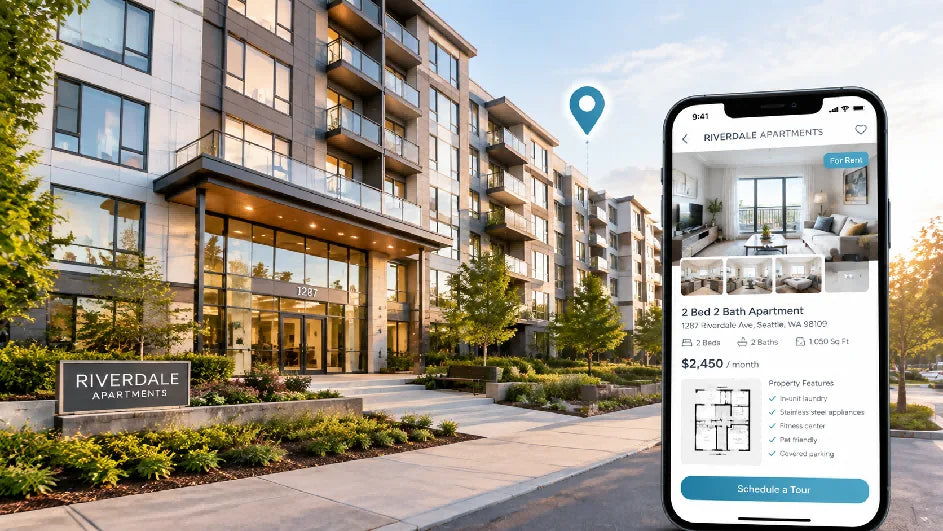
Give renters enough information to decide whether a unit fits before they visit. That saves time for renters, leasing staff, and on-site teams. Every listing should answer the questions that create the most uncertainty: What is the layout? Which rooms connect? What is included? How close is the unit to the entrance, parking, transit, or shared amenities?
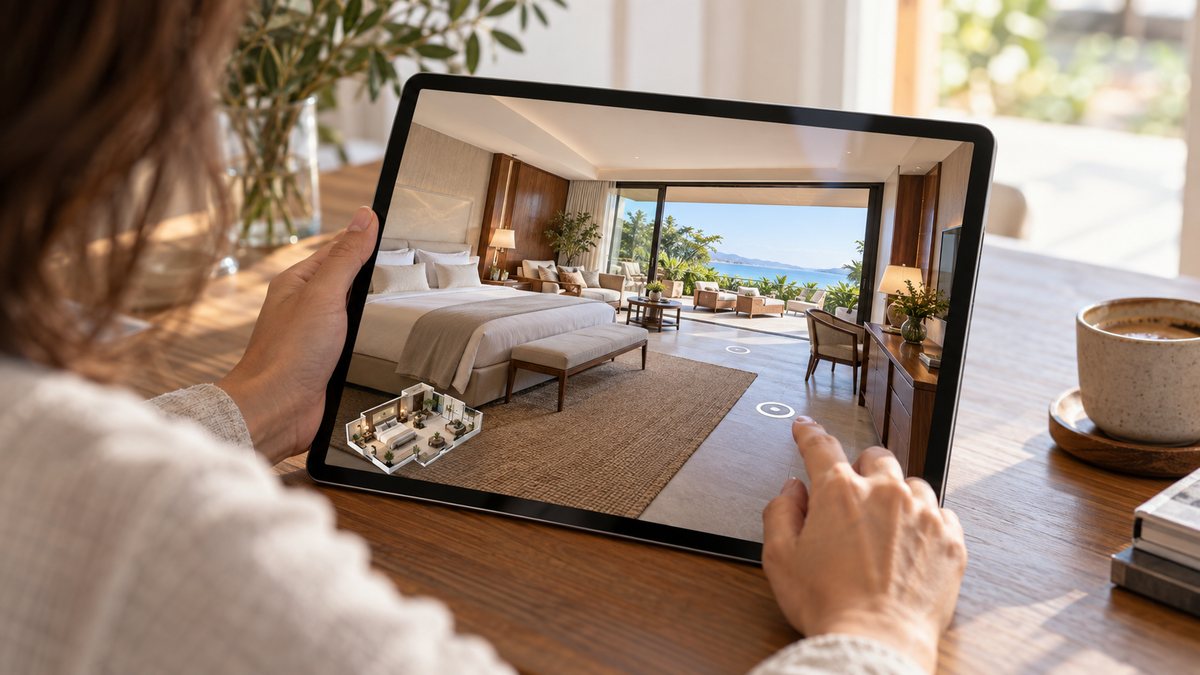
Start with current photos and a clear description, then add the details photos cannot show well. A floor plan helps a renter judge furniture fit and room flow. A virtual walk-through helps them see whether the kitchen opens into the living room, how much natural light reaches a bedroom, or whether a home office can fit near the entry.
Keep the content honest. Do not use wide-angle images that hide awkward corners or show amenities that are not available to that unit. A renter who arrives with realistic expectations is more likely to have a productive in-person tour.

Build a Marketing Plan for Apartments and Rental Properties
A multifamily marketing plan should give every vacancy a repeatable launch process and show which channels bring qualified leads. It does not need a separate creative campaign for every vacancy. It needs an organized system that gives each listing the right assets, distribution channels, and follow-up path.
Begin with a simple operating plan:
- Define the audience for each property, such as students, local professionals, families, or corporate renters.
- Identify the facts that shape a decision, including layout, lease terms, pet policy, parking, accessibility, commute options, and relevant amenities.
- Create a standard asset package for every new listing, then add property-specific details where they matter.
- Publish consistently across your website, local listings, social channels, email, and paid campaigns when a vacancy needs more reach.
- Track source, inquiry quality, booked tours, applications, and signed leases so the next campaign improves.
The asset package should make the workflow easier, not create another checklist your team cannot maintain. For a one-bedroom unit, that might mean professional photos, a floor plan, a short description, an amenity image set, and an interactive tour. For a larger community, add a reusable tour of common areas and a location page that explains nearby conveniences without making unsupported promises about the neighborhood.
Review performance by source, but do not judge every channel by the same metric. Paid ads may be useful for filling a time-sensitive vacancy. Local search can support a steady stream of prospects over time. Email may work best for re-engaging past inquiries. The question is whether each channel brings the right renter or owner to a relevant next step.
Make Apartments Easier to Explore With Virtual Tours and Floor Plans
Virtual tours and floor plans reduce uncertainty at the point when a renter is deciding whether to schedule time with you. They are particularly useful for out-of-town prospects, busy professionals, and residents comparing several similar floor plans.
Use Tours to Show Layout and Condition
Create a virtual tour that follows the way someone would naturally enter and move through the home. Begin at the entry, then show shared spaces, bedrooms, bathrooms, storage, and any included outdoor area. Add clear labels for features that are easy to miss, such as in-unit laundry, a built-in desk, or a reserved parking space.
The goal is not to replace every showing. It is to help renters arrive at a showing better informed. Our real estate marketing solutions for brokerages support tours that can be embedded on a website and shared across listing workflows, helping teams present a space before an on-site appointment.
Pair Each Tour With a Usable Floor Plan
Pair the tour with a floor plan that is easy to read on a phone. A plan gives the overview that a room-by-room experience cannot. Renters can compare bedroom placement, estimate furniture space, and spot whether the living area fits the way they work or entertain.
For an apartment community with repeated layouts, a floor plan library can become a lasting asset. Update the listing-specific details, but keep the core layout information available for future vacancies. That reduces repetitive production work while giving renters a more useful starting point.

Use Digital Twins to Create Reusable Rental Marketing Content
A digital twin gives your team a reusable digital record of a real space. You can use it for a virtual tour, a floor plan, and marketing images instead of arranging separate shoots for each asset. Create the capture when the property is ready, then use those materials across more than one listing task.
That workflow is especially valuable for apartment operators with recurring unit turns. Capture a representative unit, common areas, and key amenities when they are clean and well staged. Then use the resulting content in listing pages, leasing emails, social posts, community pages, and staff training material where appropriate. Update information that changes, such as price, availability, or unit-specific finishes, instead of presenting an old capture as a current unit.
Our real estate photography workflow is designed to turn one property visit into connected assets such as immersive tours, floor plans, and shareable visual content. The practical benefit for property teams is a more consistent way to prepare and publish apartment marketing materials.
Use Your Website, Local Search, Social Media, and Paid Ads Together
Rental marketing works best when your website, local search, social media, and paid ads support one another. Your website should be the reliable home for owner services, available properties, neighborhood pages, and contact paths. Local search helps people discover those pages when they are actively looking. Social posts extend the reach of visual content, while paid ads can add targeted support when a particular property needs attention.
Give each channel a distinct job:
- Your website should host complete owner and renter information, not a stripped-down teaser.
- Local search profiles should use accurate business details, current hours, and a direct path to relevant pages.
- Social media should show a useful slice of a property, such as a bright kitchen, a flexible layout, or a new amenity, then point viewers to the full listing.
- Paid ads should send prospects to the exact listing or owner-service page that matches the message.
Consistency makes the channels reinforce each other. If an ad shows a pet-friendly apartment, the landing page should confirm the policy and show the relevant unit or community. If a social post promotes a virtual walk-through, the tour should be easy to open and the inquiry option should be visible nearby.

Turn Listing Engagement Into Owner and Renter Leads
Make the next action obvious after someone engages with a listing or service page. A renter who finishes a tour should be able to check availability, ask a focused question, or request a showing. An owner who reads about your services should be able to request a consultation without hunting through a general contact form.
Set up different conversion paths for these audiences. On apartment pages, place a short inquiry form and tour-scheduling option near the listing details. Ask only for information your leasing team will use, such as move-in timing, preferred unit type, and a contact method. On owner pages, ask about property type, location, and the management need so the first conversation starts with context.
Review where leads stop. If viewers open a tour but do not inquire, the missing detail may be lease terms or availability. If owners visit a service page but do not contact you, the page may need a clearer process or more credible proof. These small checks turn property management marketing into an operating loop rather than a one-time promotion.
Create Reusable Apartment Marketing Content With Realsee
Start by building a small, consistent content system for the apartments and properties you manage. Use the same capture and publishing standard for every new listing, then adapt the description, availability, and call to action for the audience. That gives renters a clearer way to compare homes and gives owners a tangible example of how your team presents their assets.
At Realsee, we help property teams create immersive tours, floor plans, and shareable marketing content from a connected capture workflow. If you are building a more consistent property presentation process, talk with our team about 3D property solutions and the content your leasing operation needs to reuse.
FAQ
Q1: What is property management marketing?
Property management marketing is the work of attracting property owners who need management services and renters who are looking for available homes. It includes service pages, listing content, local visibility, advertising, and follow-up systems. The best approach gives each audience information that helps it make its own decision.
Q2: What should a multifamily marketing plan include?
A multifamily marketing plan should include a target renter profile, a standard listing asset package, channel responsibilities, a lead-response process, and performance measures. Add property-specific information such as lease terms, amenities, and floor plans so the plan stays useful for an actual leasing decision rather than becoming a generic calendar.
Q3: How can a property manager market vacant apartments on a limited budget?
Start with accurate listing pages, current photos, clear floor plans, and a consistent local search presence. Reuse well-produced visual assets across your website, email, and social posts instead of creating a new campaign for every channel. Paid promotion can then focus only on vacancies that need additional reach.
Q4: Should apartment listings include virtual tours?
Yes, when the tour accurately represents the unit or clearly identifies a model unit. A virtual tour helps renters assess layout and condition before they spend time on a showing. It is most useful when paired with current availability, a readable floor plan, and a simple way to ask questions.
Q5: How do real estate digital marketing services help property managers?
Real estate digital marketing services can help property managers organize website content, local visibility, advertising, and lead tracking. The value comes from connecting each activity to a practical outcome, such as a renter inquiry or an owner consultation, instead of treating traffic and social engagement as the final result.