

Commercial real estate marketing works when it puts the right property in front of the right people and gives them enough information to take the next step. A good campaign is not only a brochure or a listing page. It includes a clear message, useful property details, strong visuals, the right distribution channels, and a simple follow-up plan.
For commercial properties, prospects are not only asking, “Does this place look good?” They are asking whether the space will work for their business. They may need to assess access, layout, loading, parking, customer flow, room size, and future plans before they agree to a site visit.
This guide explains how to market office, retail, and industrial properties in a way that helps buyers and tenants make faster, better-informed decisions.
Build a Commercial Real Estate Marketing Plan Before You Create Assets
Start with the deal, not the camera. Before you book photography or build a property page, decide who the property is for and what they need to understand.
A warehouse tenant may care most about dock doors, yard space, and truck access. A retail tenant may care about storefront visibility, parking, nearby anchors, and the customer path from the street to the sales floor. An office tenant may focus on daylight, meeting rooms, employee access, and how the layout supports its team.
Define the Audience and Decision Criteria
List the people who may review the property. This may include:
- A broker or tenant representative
- A business owner
- An operations lead
- A finance leader
- A facilities manager
- An architect or space planner
Each person may look for something different. Your marketing package should help them answer practical questions before they spend time on a tour.
For example, an industrial prospect may need to know whether trucks can enter the site easily. A retail prospect may need to see the storefront from the customer approach. An office prospect may need a clear floor plan before involving its design team.
Set the Main Property Message
Every listing needs a simple message. Do not try to lead with every feature at once.
Choose two or three points that make the property relevant to its likely audience. For example:
- A corner retail space with strong street visibility
- A warehouse with direct loading access and a large yard
- A flexible office floor with meeting rooms and room to grow
- A multi-tenant property with easy access to transit and parking
Use that message in the listing headline, broker email, property page, and social posts. It helps people understand why they should keep reading.
Choose How Openly to Market the Property
Not every property needs the same level of public exposure.
A public leasing campaign may use listing platforms, a property page, email, broker outreach, and social content. A confidential investment sale may need a tighter approach, with controlled sharing and a data room for qualified parties.
Decide early what can be shown publicly, what should be shared only after an inquiry, and who approves final marketing materials.
Create the Property Asset Package
Marketing assets should make it easier to understand the real property. They should not hide weak areas or create a false impression.
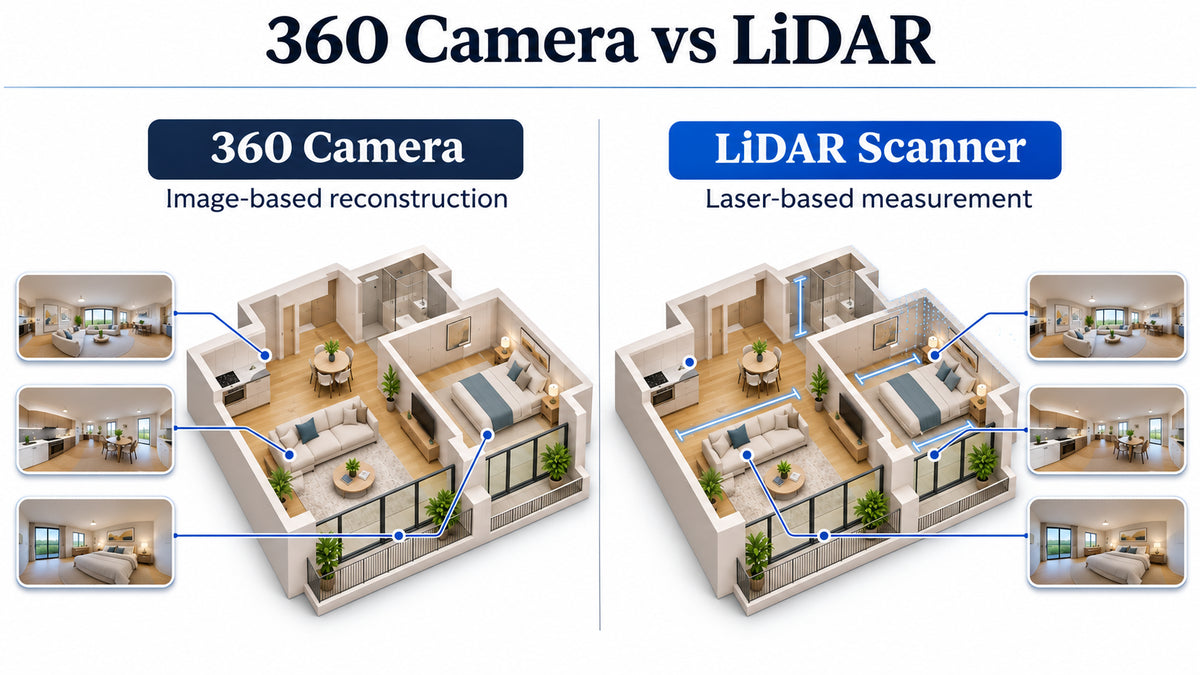
The strongest commercial listings usually combine photos, site context, floor plans, and a way to explore the space remotely.
Commercial Real Estate Photography
Commercial real estate photography should show the parts of the property that affect a business decision.
For an office, capture the entrance, lobby, open work areas, meeting rooms, private offices, shared amenities, and views where relevant. For retail, show the storefront, customer approach, sales floor, storage area, and back-of-house spaces. For industrial property, show dock doors, bays, clear paths, staging areas, and yard access.
Use a strong hero image, but do not stop there. The rest of the photo set should answer the questions a prospect would otherwise ask during a first tour.
Drone Photography for Site Context
Drone photography is useful when the site itself matters to the deal. It can show roads, parking, nearby buildings, rooflines, rail access, loading areas, and the wider neighborhood.
Use aerial images when they add information that ground-level photos cannot show. A large logistics site may need an aerial view of truck access and yard space. A small retail unit may benefit more from a clear street-level image that shows signage and customer approach.
If you use a drone for commercial work in the United States, follow the FAA’s commercial drone rules and any site-specific access rules.
3D Virtual Tours for Remote Review
A 3D virtual tour helps people review a property before everyone can meet in person. This is useful when an owner, tenant representative, regional operator, or finance lead is in another city.
A tour does not replace due diligence. It does give people a clearer first look at the layout, condition, and path through the space. That can make the in-person visit more focused.

For example, an out-of-town retail team can review the storefront, customer areas, and storage space before sending a local operator to the property. An office tenant can share the same tour with its space planner before discussing a possible layout.
For a real commercial leasing example, see how 3D tours and Google Street View supported commercial property marketing.
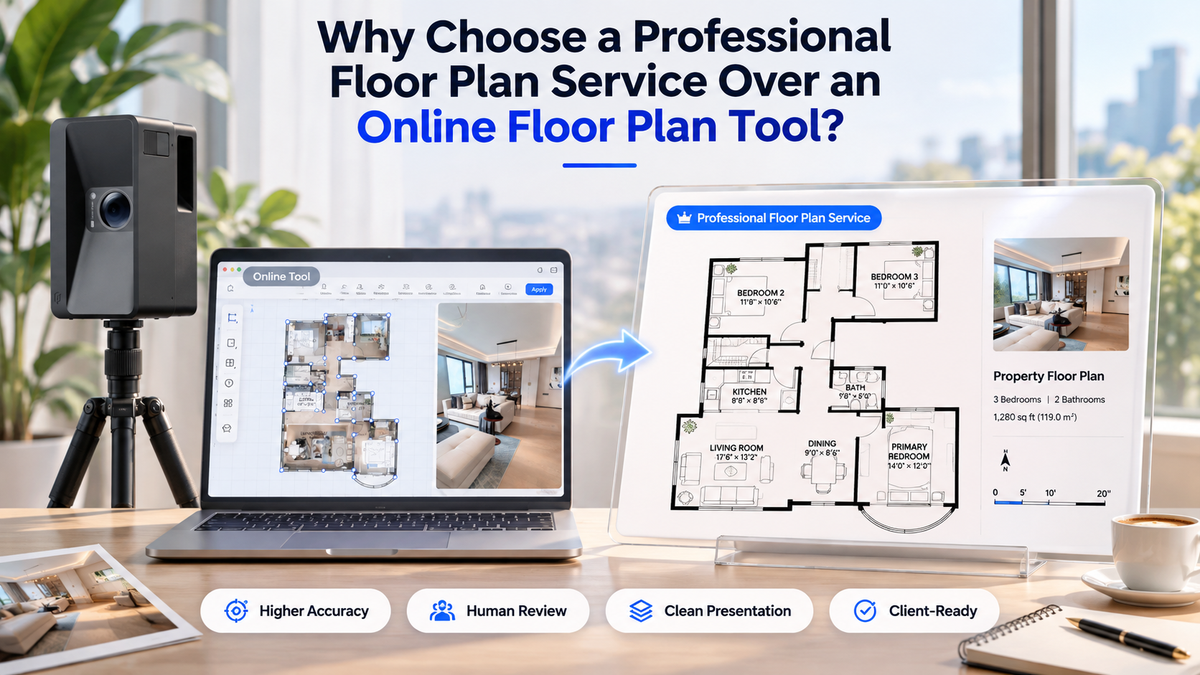
Floor Plans for Space Planning Conversations
A floor plan helps prospects connect individual rooms to the full property. It is especially useful when several people need to discuss fit before a visit.

Keep the plan clear and easy to read on a laptop. Use labels that match the listing. Show main entrances, key rooms, loading areas, and other important access points.
A floor plan can support an early conversation, but it should not replace verified lease documents, field measurements, or professional design work. Use current, approved figures when you publish square footage or room dimensions.

Distribute the Listing Through the Right Channels
A strong property package only helps if the right people see it. Use the channels your audience already relies on, then give each channel a clear job.
Use Listing Platforms and a Dedicated Property Page
Listing platforms are useful for discovery. They should show core facts, the strongest images, and a clear next step.
A dedicated property page gives you more room to explain the opportunity. It can hold the full photo set, 3D tour, floor plan, brochure, video, and contact details in one place. It also gives brokers one reliable link to share with prospects.
Keep the information consistent across every channel. A prospect should not find different square footage, different photos, or different availability details in different places.
Use Broker Outreach and Targeted Email
A general email blast is easy to ignore. A targeted message is more useful.
Start with the people most likely to know the right tenant, buyer, or investor. In the email, lead with one relevant point. It could be direct loading access, a visible corner location, a flexible office layout, or a specific submarket advantage.
Then link to the full property package. Give the recipient a simple reason to forward it to someone else.
Commercial email in the United States must follow the FTC’s CAN-SPAM guidance. Use accurate sender information, honest subject lines, a valid business address, and a clear way to opt out.
Use Social and Video to Support the Campaign
Social media should support the campaign, not replace the property page or broker network.
LinkedIn can work well for office, industrial, investment, and business-focused properties. Short video can help explain a site, show a walkthrough, or highlight a feature that is hard to understand in still images.
Keep the content specific. A short post about dock access or a street-facing retail corner is more useful than a generic post saying that a property is “unique.”
Adapt the Campaign to the Asset Type
Different commercial properties need different proof. Do not use the same asset checklist for every listing.
Office Properties
Office prospects want to picture the workday. Show arrival, lobby access, open work areas, meeting rooms, private rooms, shared spaces, and natural light.
A floor plan should make it easy to understand how teams move through the space and support early office space planning. If the office could support several work styles, show the current layout clearly without promising future build-out.
Retail Properties
Retail marketing should show how customers reach, notice, and move through the location.
Prioritize storefront visibility, pedestrian approach, parking, nearby anchors, delivery access, and the link between front-of-house and back-of-house areas. A 3D tour can help a brand team compare locations without travelling to every market first.
Industrial Properties
Industrial listings should lead with facts that affect daily operations.

Show dock doors, grade-level access, truck routes, yard space, clear paths, bay layout, storage areas, and the connection between loading and interior operations. Pair aerial context with interior visuals so prospects can understand both the site and the building.
Launch, Follow Up, and Measure Qualified Interest
Marketing does not end when the listing goes live. Set a short launch plan and decide what signals matter.
A simple 30-day launch may include:
- Publish the listing and property page.
- Send the package to key brokers and qualified contacts.
- Share short, property-specific social content.
- Follow up with people who requested information or viewed the full package.
- Review what questions prospects keep asking and update the listing if needed.
Do not judge a campaign only by page views. Watch for qualified inquiries, brochure requests, tour requests, repeat visits, broker conversations, and progress toward a letter of intent.
If a listing gets views but few serious inquiries, the problem may be the audience, message, price, property details, or next step. Better visuals alone will not solve every problem.
Turn One Capture Into Reusable Marketing Assets
A planned capture session can support more than one listing image.
The same property visit can create photos, panoramas, a 3D tour, a floor plan, and material for email, social posts, brochures, and sales decks. This helps the campaign stay consistent and gives the team more value from one on-site visit.
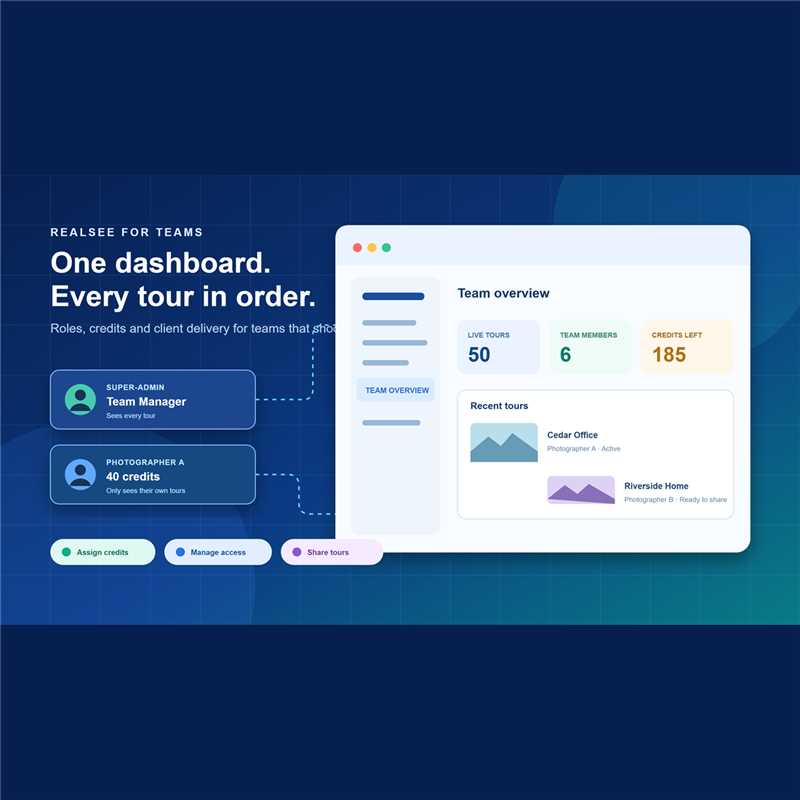
Realsee’s commercial real estate solutions are built for teams that need immersive tours and reusable spatial assets for commercial properties. After capture, teams can also use Realsee Console to manage tours, floor plans, publishing, and engagement data in one workflow.

Market Commercial Properties With Realsee
Commercial prospects need more than a few attractive images. They need a clear way to assess layout, access, site context, and business fit before an in-person tour.
Realsee helps teams create 3D tours, floor plans, panoramas, and other spatial assets from one capture workflow. Brokerages can explore our real estate marketing solutions, while photographers can see how to build a repeatable 3D tour service.
FAQs About Commercial Real Estate Marketing
Q1: What Is the First Step in Commercial Real Estate Marketing?
Start by defining the likely buyer or tenant and the business need the property must meet. Then choose the property facts, visuals, and channels that help that audience decide whether the space is worth a closer look.
Q2: Which Marketing Assets Matter Most for a Commercial Listing?
The most useful assets depend on the property type. Most listings need strong photography, accurate facts, and a clear floor plan. Drone images, video, and 3D tours add value when they help explain site context, layout, or remote decision-making.
Q3: Should Every Commercial Property Have a 3D Tour?
No. A 3D tour is most useful when several people need to review the space remotely, the layout is important, or the property will be compared with other locations. It should support, not replace, an in-person tour and due diligence.
Q4: How Should a Brokerage Measure Marketing Results?
Track qualified actions, not only views. Useful signals include inquiries, brochure requests, tour requests, repeat visits, broker feedback, and movement toward offers or letters of intent.
Q5: Can One Property Capture Support Multiple Marketing Channels?
Yes. A planned capture can support a listing page, broker email, property brochure, social content, sales deck, and 3D tour. Reusing one accurate asset set helps keep the campaign consistent.