

Commercial real estate marketing works best when it helps a buyer or tenant judge business fit before an in-person tour. Strong listings show the property's layout, site context, access, and usable area through photography, aerial views, floor plans, and 3D walkthroughs. That gives every stakeholder a useful way to review the space, even when they are not in the same city.
Why Generic Marketing Underperforms for Commercial Listings
Generic marketing underperforms because commercial prospects are assessing operational fit, not imagining a lifestyle. A decision may involve a broker, business owner, finance lead, operations manager, and space planner. Each person comes to the listing with a different question, and a short description plus a few photos often leaves those questions unanswered.
Commercial decisions also tend to move through a longer review cycle. A prospect may revisit the listing after discussing a lease, comparing sites, or checking whether a layout can support a team, showroom, storage area, or customer flow. Marketing assets should make that second and third review as useful as the first.
Use the listing to answer practical questions early:
- What does the space look like from the street, parking area, and surrounding roads?
- How do people, customers, deliveries, or equipment move through it?
- Which rooms, bays, storefront areas, or outdoor zones are included?
- Can the prospect share a clear view of the property with colleagues who cannot tour it yet?
When those answers are missing, brokers often spend time arranging introductory tours for prospects who cannot yet confirm whether the site is a serious fit.
What Commercial Buyers and Tenants Look for Before They Tour
Commercial buyers and tenants want enough visual and spatial information to decide whether an in-person visit is worth scheduling. They are usually comparing a property against a real operating need, such as office capacity, customer visibility, loading access, equipment placement, or room for future growth.
Before touring, many stakeholders look for:
| What they need to assess | What the listing should show |
|---|---|
| Layout and circulation | Entrances, corridors, doors, open areas, and the path between key zones |
| Site context | Street frontage, neighboring uses, parking, loading areas, and access routes |
| Fit-out potential | Columns, ceiling conditions, utilities, existing rooms, and flexible open space |
| Space planning inputs | A readable floor plan, room dimensions, and the relationship between usable areas |

This is where commercial space planning begins. A tenant may not finalize a layout before a visit, but an accurate plan helps their team rule out obvious problems, such as a reception area that disrupts customer flow or a warehouse bay that does not support the intended use. Measured area figures also need a stated basis, because rentable and usable area follow the BOMA floor measurement standards rather than marketing copy.
The key is to show the existing condition clearly. Do not present an empty room as a blank promise. Show the actual layout and give the prospect enough context to discuss what could change with their architect, designer, or operations team.
Core Commercial Real Estate Marketing Strategies
The most effective commercial real estate marketing combines visual proof with information a prospect can share internally. Each format has a separate job: photography establishes quality, drone coverage explains scale and context, a 3D tour supports remote review, and a floor plan helps the team discuss fit.
Commercial Real Estate Photography
Commercial real estate photography should document the features that affect a business decision. Photograph exterior identity, entrances, storefront visibility, parking, loading areas, lobby condition, primary work areas, and meaningful building details. A polished hero image can attract attention, but the full set should answer the questions a prospect will otherwise ask on site.
For an office, that may mean showing daylight, meeting rooms, elevator access, and the relationship between open work areas and enclosed rooms. For a retail unit, show the storefront from the customer approach and the visibility of the sales floor. For an industrial property, show clear heights, dock doors, staging space, and the route from the yard to the building. Teams building a repeatable kit for this work can compare bodies, lenses, and capture gear in our guide to choosing a camera for real estate photography.
Commercial Real Estate Drone Photography
Commercial real estate drone photography is most useful when the site itself affects the deal. Aerial imagery can show a multi-building campus, parking capacity, nearby roads, rail access, surrounding retail, roof condition, or the relationship between a warehouse and its loading yard.
Use aerial views to add context that cannot be understood from ground level. They should complement, rather than replace, on-the-ground images. Follow the FAA rules for commercial drone operators and property-access requirements, and avoid using a drone simply because the property is commercial. A small street-front retail unit may need a strong exterior image more than an aerial sequence. Our overview of drone use in property marketing and inspections covers where the aerial pass earns its place.
3D Virtual Tours for Remote Stakeholder Viewing
3D virtual tours help commercial teams review a property without waiting for every decision-maker to be available for the same visit. A broker can send one link to an out-of-town owner, a regional operations lead, or a tenant representative, then use the same asset in a follow-up conversation.
The value is not a substitute for due diligence. A virtual walkthrough lets stakeholders inspect the real layout, move between zones at their own pace, and arrive at an in-person tour with more specific questions. That makes the physical visit more focused and can reduce avoidable back-and-forth during the early review stage. If you are deciding between formats, our comparison of a 3D walkthrough and a 360 tour explains what each one lets a viewer do.
Floor Plans and Commercial Space Planning
Floor plans turn visual interest into a practical conversation about use. Pair a clear plan with the walkthrough so a prospect can relate a room, bay, or customer area to its position in the broader property.
For commercial space planning, make sure the plan is legible on a laptop and easy to share in a deck or email. Label key areas consistently with the listing, identify relevant access points, and use current measurements rather than approximate marketing copy. Our breakdown of floor plan types and where each one is used is a useful reference when you decide how much detail the listing plan needs. A floor plan should support preliminary evaluation, while lease documents, field verification, and professional design work remain the basis for final decisions.

How to Market Different Types of Commercial Properties
Different commercial properties need different proof. Build the marketing package around the activity the space must support, rather than publishing the same asset list for every listing.
Office Properties
Office prospects need to picture daily work. Show arrival, reception, open work areas, meeting rooms, private offices, shared amenities, and views that affect employee experience. Include a floor plan that makes team neighborhoods and circulation easy to discuss.
Where hybrid work or subleasing is relevant, show how the current configuration could support several work patterns without implying that a future layout is included. Clear documentation gives a tenant representative a better starting point for an internal space discussion.
Retail Properties
Retail marketing should show how a customer reaches, notices, and moves through the location. Prioritize storefront visibility, signage opportunities where permitted, pedestrian approach, nearby anchors, parking, delivery access, and the transition from front-of-house to back-of-house areas.
An immersive tour is particularly useful when a brand's real estate team is evaluating several markets from a distance. They can review the customer-facing experience and back-of-house constraints before deciding where to send a local operator.
Industrial Properties
Industrial listings should lead with operational facts that affect throughput. Capture dock doors, grade-level access, bays, clear circulation paths, yard space, column lines, storage areas, and the connection between loading and interior operations.

Photographs and plans need to work together here. Aerial context shows site access and yard relationships, while a walkthrough shows the condition and flow inside the building. Verify all material specifications through the listing record and lease documentation instead of relying on visual estimates.
How to Create and Share Commercial Property Listings
Create the marketing package from a deliberate capture plan, then distribute each asset where the audience already makes decisions. Start by identifying the property features that matter to the likely tenant or buyer, including access, layout, scale, condition, and stakeholder concerns.
Capture a Property Once, Then Create Marketing Assets for Every Channel
One well-planned capture session can produce a coherent set of assets for the listing, sales deck, direct outreach, and property website. Photograph the property, document the layout, capture aerial context where appropriate, and build a 3D tour from the same visit so each channel tells the same accurate story.
This approach is especially useful when the property may be reviewed repeatedly over several months. It reduces the chance that a flyer, broker email, and online listing show conflicting conditions or leave out a key space. Keep a simple asset checklist so the team knows which files are approved for each channel, and check the full range of outputs a single capture can produce before you book the visit.
Share Listings With Brokers, Prospects, and Remote Decision-Makers

Give each audience a shareable path to the detail it needs. Put the core facts and strongest images on the listing platform, include the floor plan and tour link in the marketing deck, and send the same link in targeted outreach to qualified prospects. Where listing data has to move between systems, the Real Estate Standards Organization data standards are the reference point for how those fields are structured.
Use a short follow-up note that calls out the most relevant feature, such as loading access, a street-facing corner, or a flexible office layout. A generic link is easy to ignore. A link tied to a stated operating need gives the recipient a reason to review the property and share it internally.
How Realsee Supports Commercial Real Estate Marketing
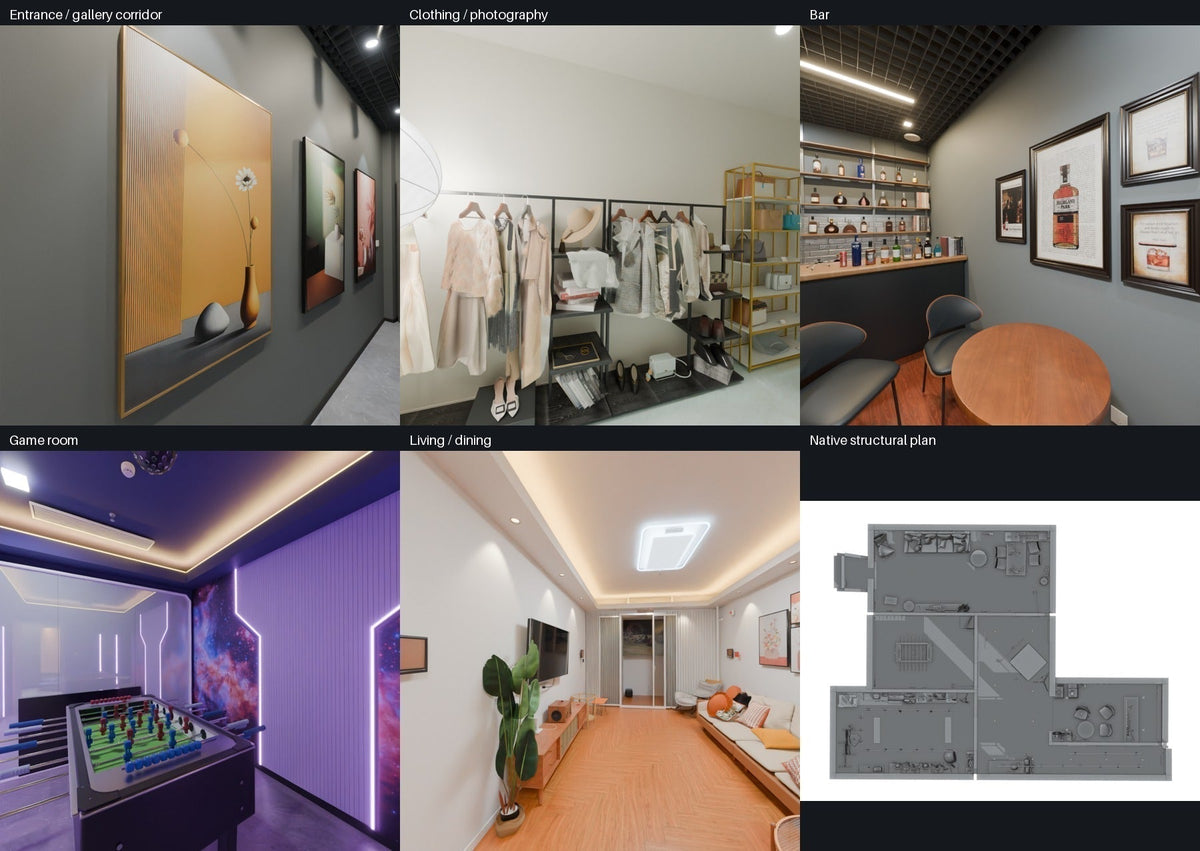
Realsee helps commercial teams turn one on-site capture into an immersive tour and reusable spatial assets. Our professional capture workflow can support 3D tours, floor plans, high-resolution panoramas, point clouds, CAD-ready outputs, and 3D snapshots, depending on the project's needs. This gives a broker or photographer material for marketing while giving a client a clearer record of the existing space.
For a commercial leasing example, see how Realsee and Google Street View supported commercial leasing. The practical lesson is simple: an interactive view can make a property easier to evaluate before the first meeting, especially when decision-makers are not all local.
For teams that need a high-quality, marketing-ready 3D walkthrough alongside spatial documentation, our commercial real estate solutions are designed for large spaces and professional workflows.
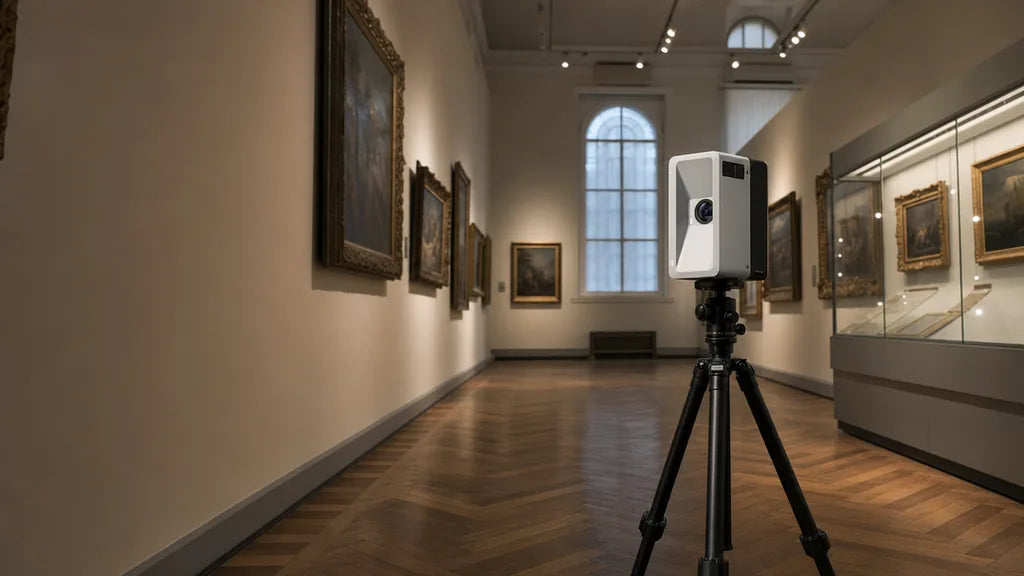
Large multi-floor assets and long-range exteriors are where the Galois P4 3D LiDAR scanner is aimed, while smaller retail units and single-tenant suites are usually served by the lighter Galois M2 LiDAR camera. Match the capture scope to the listing's actual decision needs, rather than adding technical outputs that the client will not use.

Market Commercial Properties With Realsee
Start with the information a commercial prospect needs to rule a property in or out: clear visuals, site context, a usable layout, and an easy way to share the space. Realsee can help brokerages create and distribute richer property experiences through our real estate brokerage solutions.
Photography teams can also explore our 3D tour workflow for real estate photographers to build a repeatable commercial service package, or talk with our team about a specific portfolio.
FAQs About Commercial Real Estate Marketing
Q1: How is marketing a commercial property different from marketing a residential listing?
Commercial marketing focuses on business fit. Prospects need evidence about access, layout, operating flow, site context, and potential use by several stakeholders. Residential marketing usually puts more weight on lifestyle and personal preference, while commercial material needs to support a longer, more analytical decision process.
Q2: Do commercial tenants expect exact measurements before touring a space in person?
Often, yes, but the level of detail depends on the decision stage. A clear floor plan and current measurements help a prospect assess basic fit before touring. Final lease, design, and construction decisions should still rely on verified documents and professional field measurements.
Q3: Is drone photography necessary for a small retail unit or only for large properties?
It depends on whether site context changes the decision. Drone photography can help a small retail unit when visibility, parking, nearby traffic routes, or surrounding anchors matter. If the key selling point is an interior storefront experience, strong ground-level photography may provide more value.
Q4: How should a commercial listing be shared with brokers who list on third-party platforms?
Use the third-party listing for essential facts and lead images, then include a concise link to the full asset package where platform rules allow. The package can contain the 3D tour, floor plan, brochure, and contact details, giving brokers a consistent source to forward to prospects.
Q5: Can the same virtual walkthrough be reused across multiple marketing channels?
Yes, a single walkthrough can support a property webpage, direct broker outreach, an email campaign, a sales presentation, and social posts. Keep the underlying listing facts current, and update or remove the link when the property condition, availability, or approved marketing materials change.
Sources
- Federal Aviation Administration — Rules for commercial drone operators
- Real Estate Standards Organization — Real estate data standards
- Building Owners and Managers Association International — Floor measurement standards